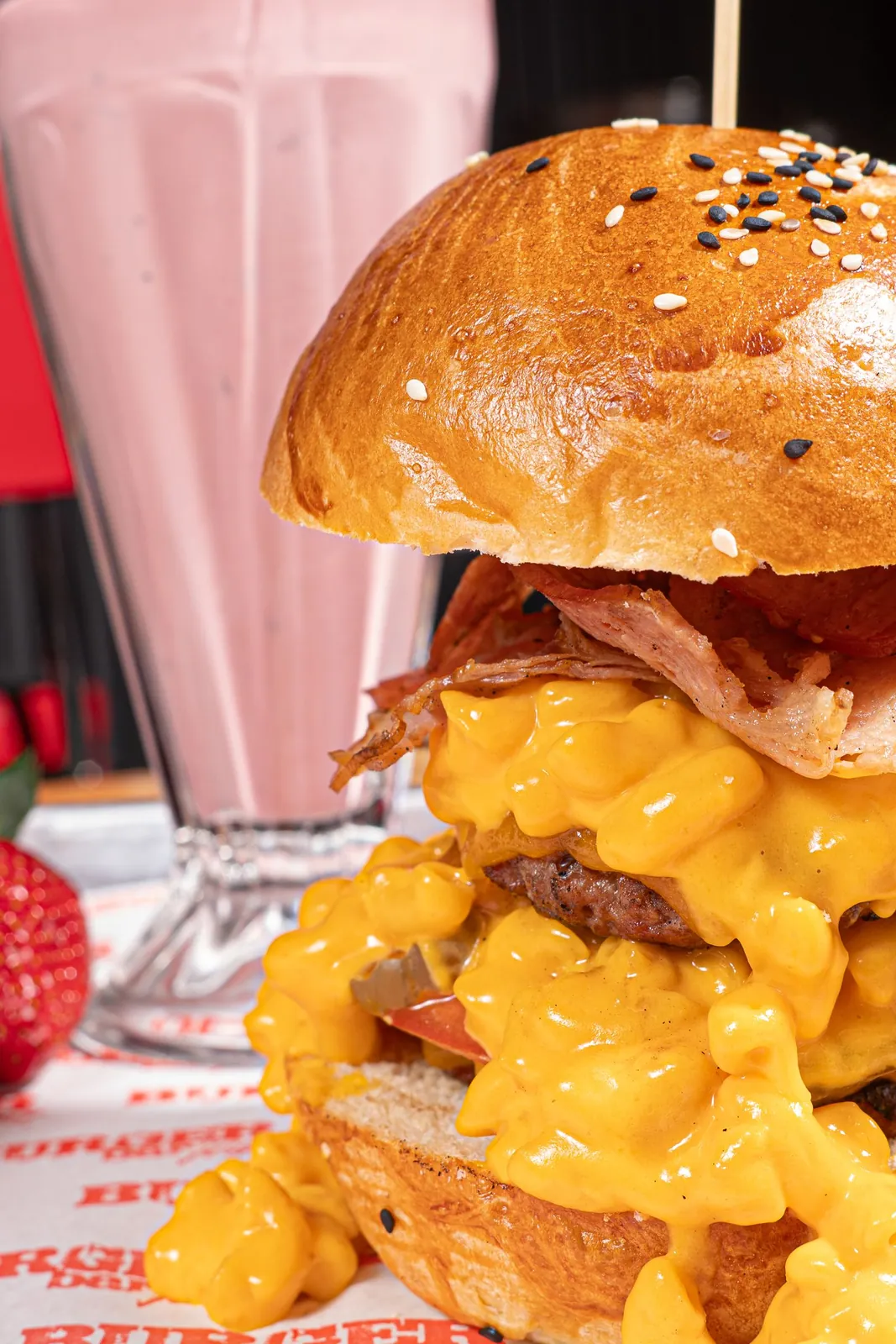
A diner drinks menu runs on ice cream and carbonation long before it runs on coffee. Milkshakes, root beer floats and, in Australia specifically, the drink known locally as a "spider" all lean on the same basic trick: cold, thick dairy meeting a fizzy or flavoured liquid.
Milkshakes: thicker than the name suggests
A proper diner milkshake is built around real ice cream blended with milk and flavouring syrup until it is thick enough to need a straw wide enough to handle it, which is really what separates a milkshake from a flavoured milk drink. Diners in the United States have served them since early soda fountain days in the late 1800s and early 1900s, and the format barely needed updating once electric blenders arrived in the 1920s and made a consistently thick shake easy to produce behind any counter.
Root beer floats: a float with a specific history
The float, ice cream dropped into a glass of soda rather than blended into it, is usually traced back to Robert McCay Green, a Philadelphia soda vendor who, as the story goes, ran out of ice on a hot day in 1874 and substituted vanilla ice cream from a neighbouring stall. Root beer became the most popular pairing in the United States because the sweetness and the slightly bitter, herbal edge of root beer plays well against vanilla ice cream, and the reaction when the two first meet, a rising head of foam, is most of the appeal before you have even tasted it.
The coke spider: Australia's own version
In Australia and New Zealand, the same idea goes by a different name: the spider, so called because the fizz hitting the ice cream creates a web-like pattern through the glass as it rises. A traditional Australian spider is built with lime or pink cream soda rather than root beer, scooped with vanilla ice cream, and it has been part of local milk bar culture for generations, with one account placing a version of the drink, then more of a cocktail, in Australian bars by the 1880s before it settled into the ice cream and soda format recognised today by around the 1930s and 1940s. A coke spider swaps in cola for the cream soda, keeping the same vanilla ice cream base, and it remains one of the easiest drinks to recognise on sight: dark cola rising through a scoop of white ice cream in a tall glass, with a long spoon for the melted float underneath once the fizz settles.
Serving these drinks properly
None of these drinks are complicated to make, but a few details separate a good version from a disappointing one. Ice cream needs to go in cold and firm, not softened, or it melts into the liquid before the fizz or the blend has a chance to do its job. A milkshake should be thick enough to resist the straw for a second before it moves. A float or spider needs a tall glass with room for the foam to rise without spilling. None of it is difficult, which is exactly why these drinks have stayed on diner menus for over a century without needing much reinvention, and why a good one is still worth pairing with whatever comes off the dessert menu at the same table.