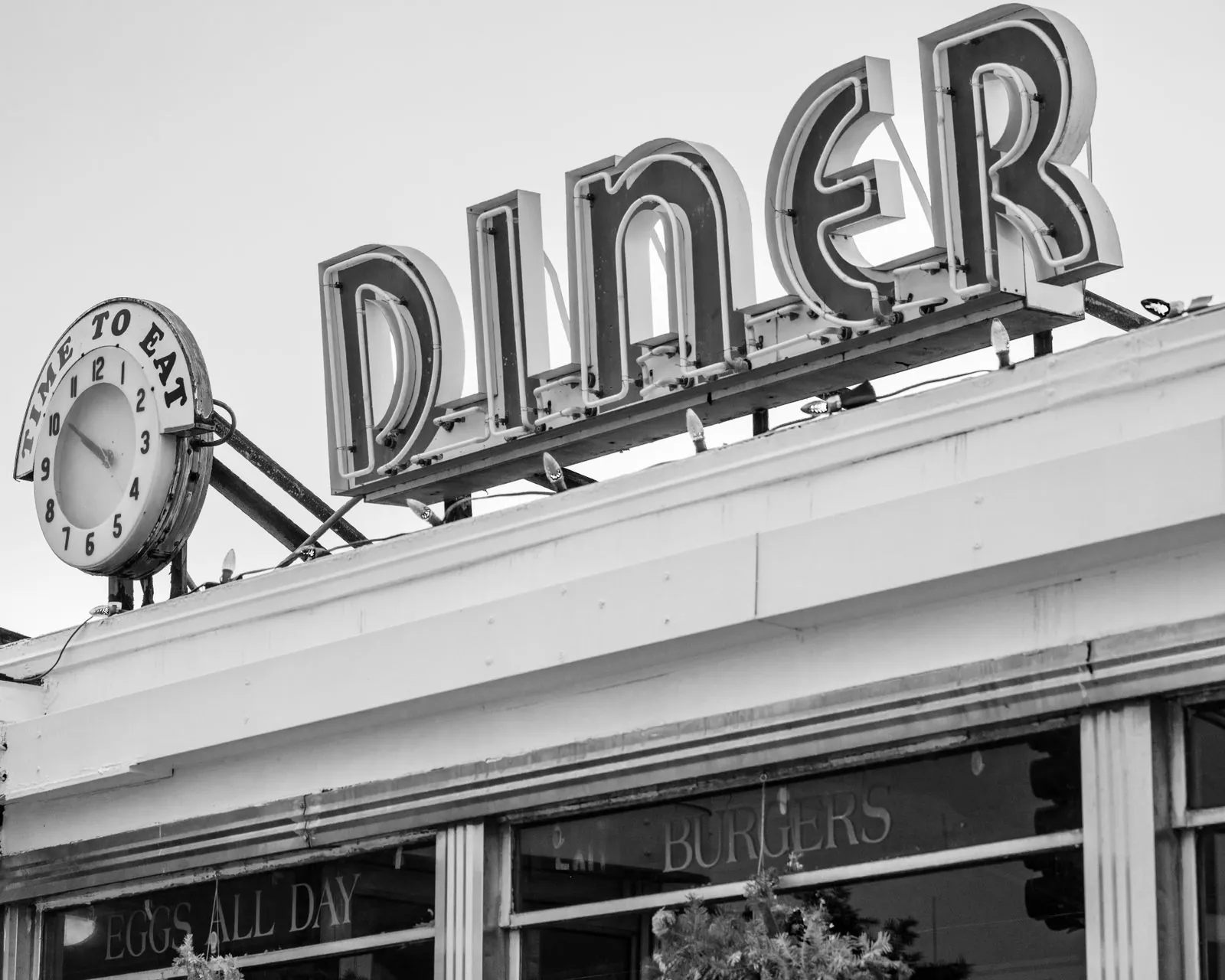
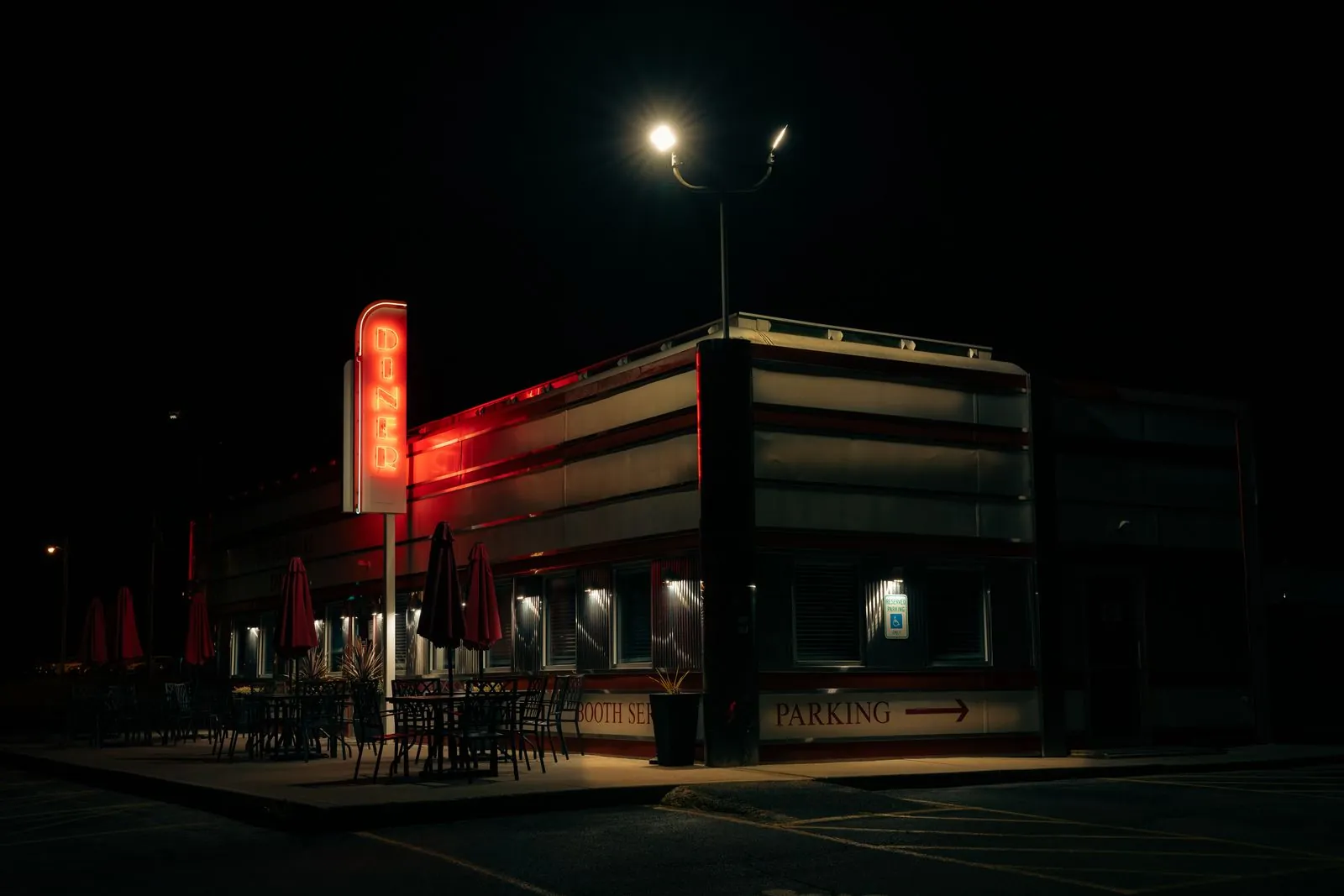
Few restaurant formats show up on screen and on record as often as the American diner. A counter, a row of booths, a jukebox in the corner and a waitress balancing too many plates is such a complete visual shorthand that films, television and music have leaned on it for seventy years without needing to explain what it means.
The diner as a film set
Hollywood built an entire nostalgic image of the 1950s diner long before most of its audience was old enough to remember the decade itself: spotless chrome counters, cheerful service, a jukebox running through the hits of the day, and teenagers sharing a milkshake with two straws. "Grease" leans directly into that image with its Frosty Palace hangout, while "American Graffiti" set a good part of its own coming-of-age story around Mel's Drive-In, a real chain that the film helped turn into a cultural reference point for the whole genre. Real diners at the time looked less polished and varied a lot more by location and clientele than the films suggest, but the stylised version is the one that stuck, because it is a far easier setting to shoot a scene in than it is to explain.
A quieter side of the same setting
Not every diner on screen is cheerful. Edward Hopper's 1942 painting "Nighthawks" is the reference point most people reach for when a diner is used to suggest loneliness instead of community: a handful of strangers under harsh light, late at night, saying nothing to each other. Diners stay open when almost nothing else does, which makes them a natural setting for isolation as well as for company, and film and television have used both sides of that same room for just as long.
Television kept the counter warm
Long after the 1950s ended, television kept returning to the same format. "Seinfeld" built an entire show partly around Monk's Café, a near-constant meeting point for its four leads. "Gilmore Girls" gave its small town a diner, Luke's, that worked as much as a second home as a place to eat. "Twin Peaks" went further still, turning the Double R Diner's cherry pie and "damn fine coffee" into one of the show's most quoted lines. None of these shows are set in the 1950s, which says something about how durable the format is: a diner reads instantly as a gathering place regardless of the decade a story is set in.
Music borrowed the same room
Music has used diners just as freely. Suzanne Vega's 1981 song "Tom's Diner", later remixed into a dance hit in the early 1990s, is probably the best-known example, an entire song built around sitting alone at a counter watching the room. Rockabilly and early rock and roll, the music most associated with the diner jukebox in the first place, grew up alongside the format rather than just referencing it, which is part of why the two still feel inseparable today.
Why the image still works
None of this requires a real diner to have hosted anything famous to make the connection land. The booth, the counter, the jukebox and the milkshake are doing most of the cultural work on their own, which is exactly why the format keeps showing up on screen and on record long after the architecture itself stopped being new. If you want the less cinematic version, the history of American diners covers where all of this actually started, and the story of the building behind this site runs through its own, more local chapter of that history.